
5 Ways to Make Your Running Plan More Effective
Following a structured running plan is one of the most effective ways to prepare for your next event. However, there's more to it than just blindly following your plan. This article will discuss 5 ways that can make your plan more effective and help you stay motivated throughout your training journey.
By Quentin van Bentum • October 2025

1. Understanding Your Plan
The single most important thing when you start a plan is understanding it. Take some time to go over all the run types and understand the distance and pace progression. Many people start by blindly following a plan, which can result in poor execution, loss of motivation, or even injury.
If you take the time to understand your plan, you will know where it takes you and how the build-up works. This way, you know exactly what is expected from you week by week, and you have a much higher chance of actually completing it.
It's a simple step that doesn't require much time, but it's quite often overlooked. A little preparation will absolutely change the way you go about finishing your plan. Take your first step today and create your personalized plan with our Running plan generator.

2. Track Your Progress and Personal Well-being
The biggest motivator during your plan is seeing your progress and the distance you accumulate. By tracking your progress, you don't just do the runs—you visualize them as a journey. Every run is another step closer to your goal.
However, there's something that's even more important to track: your personal well-being. Running can truly take over a part of your life—it's heavily time and energy consuming. It's important to take outside factors into consideration when you track your progress.
That extra run in your statistics dashboard might look cool there, but is it worth sacrificing your personal well-being for? Regularly give yourself an unbiased feedback moment. Ask yourself if things are going the right way, or if your life outside running is getting negatively affected by it.
Remember, for most of you, running is your hobby and a healthy way to spend extra time. Don't let it consume you or the other things you love and care about.
Pro Tip: If you're not tracking your runs yet, start simple. Our Progress Tracker lets you log your sessions, visualize your distance, and reflect on how you feel throughout the plan with notes on each run. It's included in every upgraded plan and helps you stay consistent week after week.
3. Adjust Your Plan to Your Liking
There's a fine line between following your optimal training plan and actually having fun following it. There's no harm in changing the plan slightly to your liking, as long as you do it smartly.
When adjusting your plan, it's important to stay realistic with your capabilities. But making your plan truly yours helps with staying motivated. If you feel like you need to go a bit slower or faster, change the pace. If those long runs are just slightly out of reach, lower them.
Adjusting your plan along the way is perfectly safe and fine, but try to avoid major changes—keep changes small but impactful. Remember, the best plan you can have is a plan that you can actually complete and follow!
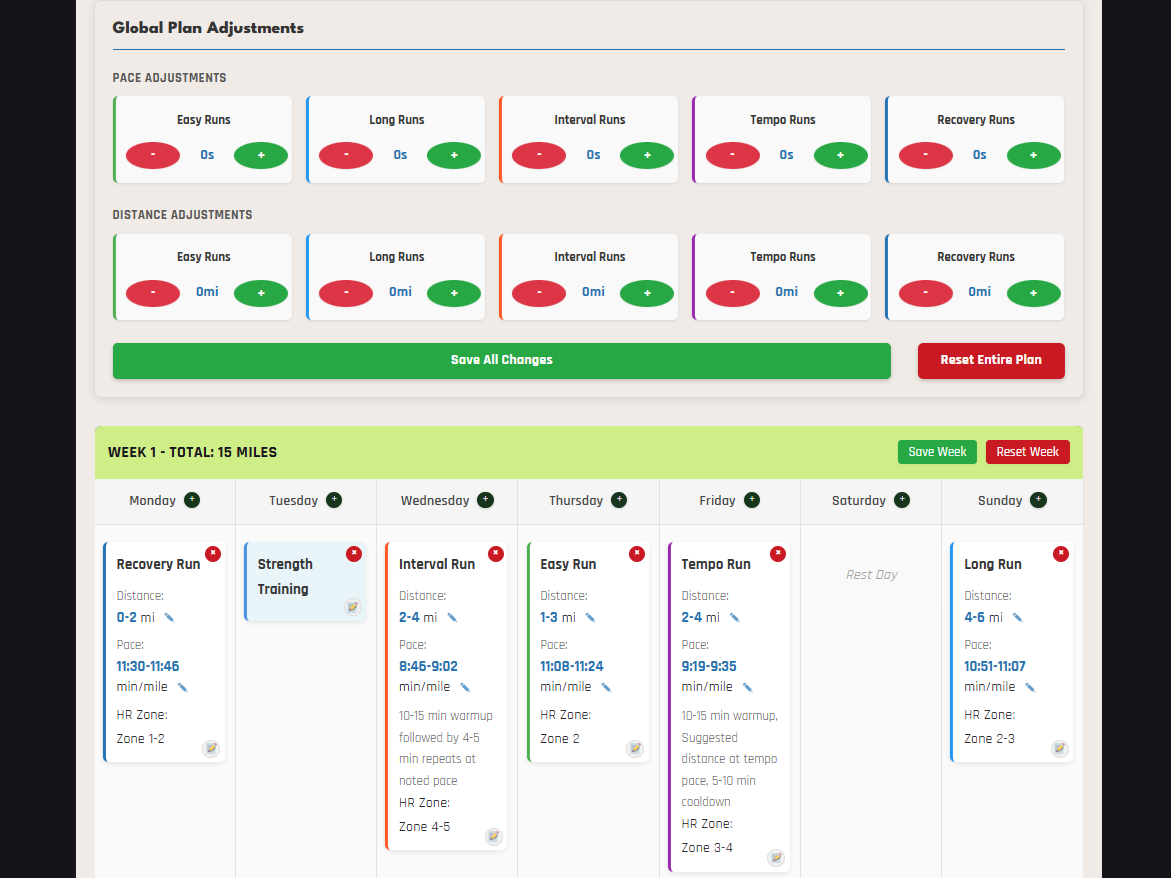
Editor Feature: Our integrated plan editor is included when you upgrade your free generated training plan. If you'd like to try it first, you can try week 1 for free after you save a training plan to your account.
4. Add Strength, Other Forms of Cardio, and Mobility Training
A running plan isn't just about running. Besides doing the runs themselves, it's also important to support your plan with these activities.
- Strength Training: Arguably the most important one. Running is incredibly demanding on your muscles and tendons, which is why running injuries are so common. By adding strength training to your plan, you'll strengthen your muscles significantly and help prevent injuries.
- Other Forms of Cardio: Activities like biking and swimming allow you to train your cardiovascular system just as well as with running. But the benefit is that they use other muscles, so you can rest your body from running while still improving. This is also a great way to keep training if you start to feel some pain during runs.
- Mobility Training: Helps your muscles relax and become more flexible, decreasing the likelihood of injuries and helping you feel fresher during runs. A good post-workout stretching session can help you get rid of soreness and stiffness and get you ready quicker for the next run.

In the guide hub, I have extensive guides for each one of these activities. Check it out here!
5. Give Yourself a Feedback Moment During Every Recovery Week
Last but not least, give yourself feedback. Our running plan generator includes a recovery week after every 3 weeks of building. This week is there to take some load off your body, but it also gives you time to reflect on your performance over the last weeks.
Take this week to reflect on the previous 3 weeks—were they too easy, too hard, or just right? From there, you can then go into the next build phase with confidence and make adjustments if needed. This little feedback moment will keep you motivated in a realistic way.
Putting It All Together
These five strategies work together to create a more effective and sustainable running plan. Understanding your plan gives you confidence, tracking progress keeps you motivated, adjusting to your preferences ensures enjoyment, cross-training prevents injuries, and regular feedback keeps you on the right path.
Remember that the best running plan is one that you can stick to consistently. Don't be afraid to make small adjustments along the way—your plan should work for you, not against you. With these strategies in place, you'll not only complete your training plan but also enjoy the journey and achieve your running goals.
Ready to put these strategies into action? Start by generating a personalized training plan that you can customize and track throughout your journey.